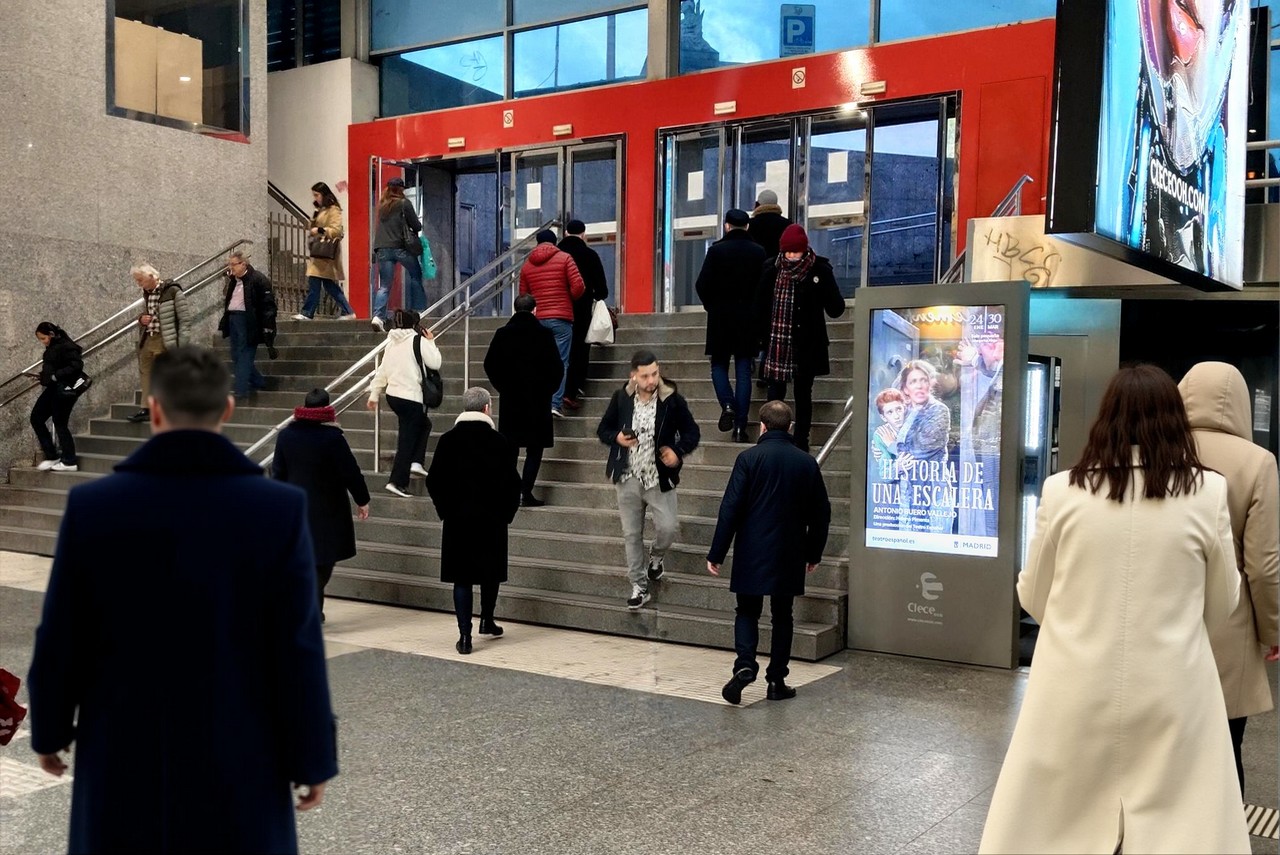


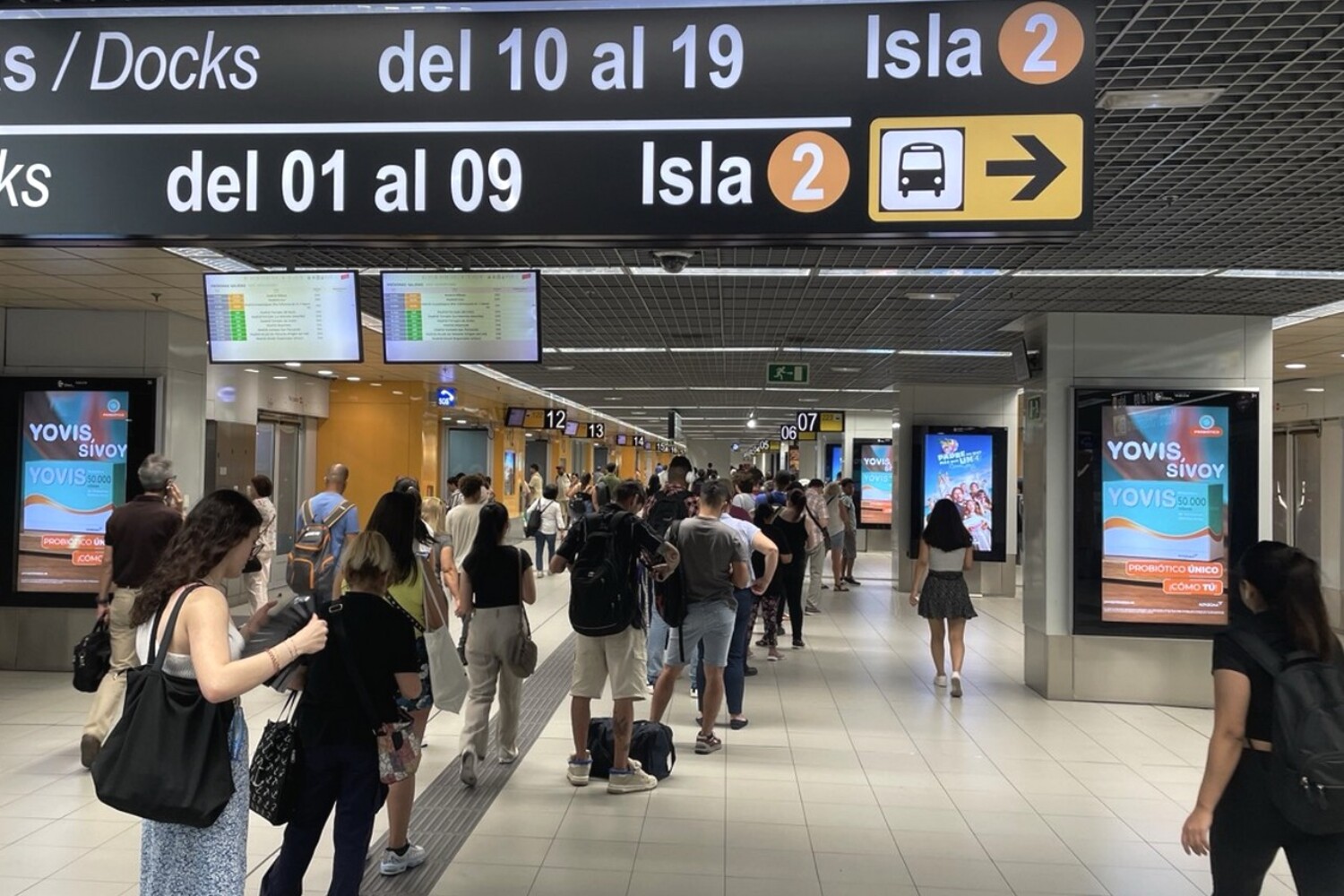
Digital transport advertising displays in Madrid have established themselves as a strategic medium in outdoor advertising campaign planning. Their evolution into a measurable, flexible and optimisable medium brings them increasingly closer to the analytical standards of digital channels, while retaining the reach and brand awareness traditionally associated with outdoor advertising.
When a brand invests in outdoor advertising in Madrid, Spain, location and audience volume remain essential variables. However, media agency planners and advertisers now analyse a much broader range of indicators. These include reach, frequency, audience quality, affinity, targeting capabilities, performance measurement and contribution to brand recall.
Madrid’s major transport interchanges bring all these factors together in an everyday mobility environment characterised by high repeat traffic and extensive advertising exposure.
MASS AUDIENCES AND RECURRING MOBILITY
Advertising in transport interchanges reaches large volumes of travellers. Every week, hundreds of thousands of journeys pass through Plaza de Castilla, Príncipe Pío, Avenida de América and Valdebebas. These transport hubs connect the metro, urban and intercity buses, trains and long-distance transport services, making them part of everyday journeys to work, study, shopping and leisure activities.
The combination of high traffic volumes and recurring visits makes digital advertising displays in Madrid particularly effective for building brand awareness. Travellers do not encounter these displays just once: they pass through the same entrances, corridors, platforms and waiting areas week after week.
HOW DO TRANSPORT ADVERTISING DISPLAYS CONTRIBUTE TO BRAND RECALL?
In outdoor advertising, there is a fundamental difference between being seen and being remembered. Reach makes it possible to connect with a large number of people, while frequency helps ensure that the message remains in their memory.
In transport environments, repetition is an inherent part of everyday mobility patterns. A user who passes through Plaza de Castilla every day on their way to work will encounter the same campaign several times a week. Unlike advertising formats associated with occasional journeys, transport interchanges provide more consistent and predictable exposure.
This sustained frequency can strengthen indicators such as brand awareness, consideration and message retention, provided that the creative content, advertising pressure and campaign duration are properly planned.
That is why digital out-of-home advertising networks in transport environments are particularly relevant when the objective is to combine broad reach with effective frequency among regular audiences.
DIGITAL ADVERTISING DISPLAYS: BRINGING AGILITY TO OUTDOOR ADVERTISING
Digitalisation has transformed the role of outdoor advertising in media planning. A digital advertising display allows campaigns to be adapted with a level of agility that was impossible just a few years ago, while making it easier to integrate them into omnichannel strategies.
Its main capabilities include:
- Remote creative updates
- Time-slot targeting
- Dynamic creative
- In-campaign optimisation
- Integration with omnichannel strategies
- Programmatic activation (pDOOH)
Furthermore, measurement has evolved from general estimates towards models supported by mobility signals, travel patterns and advanced audience analytics tools.
This evolution allows advertisers and agencies to incorporate DOOH into branding, performance and digital activation strategies, rather than treating it as a standalone channel.
WHAT AUDIENCE MEASUREMENT DATA DOES CLECE OOH PROVIDE?
For Clece OOH’s advertising inventory, campaign planning can draw on quantitative data such as:
- Audience volume throughout the campaign period
- Audience distribution by day and time slot
- Impressions by advertising format
- Reach among the population of the Community of Madrid, Spain’s most dynamic region
This analysis is complemented by qualitative audience insights, including:
- Sociodemographic profiles
- Key audience affinities
- Audience origins
THREE WAYS AUDIENCE MEASUREMENT IMPROVES A DOOH CAMPAIGN
1. Developing better media plans before activation
Historical data helps identify which advertising formats, time slots and travel routes are best suited to each advertiser’s objectives and industry sector.
This makes it possible to plan reach and frequency more accurately from the outset.
2. Optimising campaigns while they are running
Campaigns are no longer static activations. Advertising pressure, time slots and message distribution can be adjusted at any time, based on observed behaviour and communication needs.
3. Activating campaigns through pDOOH
Digital inventory available through programmatic buying makes it possible to manage campaigns using criteria similar to those applied in conventional digital advertising:
- Activating campaigns during specific time slots
- Prioritising particular days
- Adjusting budgets
- Coordinating messages with other digital channels
- Implementing dynamic creative strategies
This combination makes transport interchanges a relevant advertising environment for national and international brands looking to build awareness on a large scale in Spain across sectors such as automotive, food and beverages, banking, insurance, retail, technology, beauty, travel and entertainment.
KEY FIGURES FOR THE DIGITAL ADVERTISING DISPLAY NETWORK AT MADRID’S MAIN TRANSPORT INTERCHANGES
The digital advertising displays located at Madrid’s main transport interchanges bring together three attributes that are difficult to combine simultaneously in other advertising environments:
- Mass weekly reach: the network reaches 35% of the population of the Community of Madrid. This represents a weekly audience of 2 million residents and more than 1 million people from the floating population.
- High frequency: an average of 30 OTS (opportunities to see) per week, driven by recurring travel patterns.
- Efficiency: a concentrated network of advertising displays generating 130 million weekly impressions at a competitive CPM.
As a result, digital advertising networks at transport interchanges offer agencies and advertisers an exceptional combination of reach, frequency, context and activation capabilities. When planning outdoor advertising in Madrid, Spain, these environments make it possible to turn everyday mobility into a sustained opportunity for brand exposure.
| Interested in advertising across Madrid’s digital display networks? Get in touch. We’ll assess your needs at no obligation and recommend the best solution. Contact us via the contact form on our website, by email at info@cleceooh.com or by phone on +34 91 484 22 90. |
|---|